

Summary
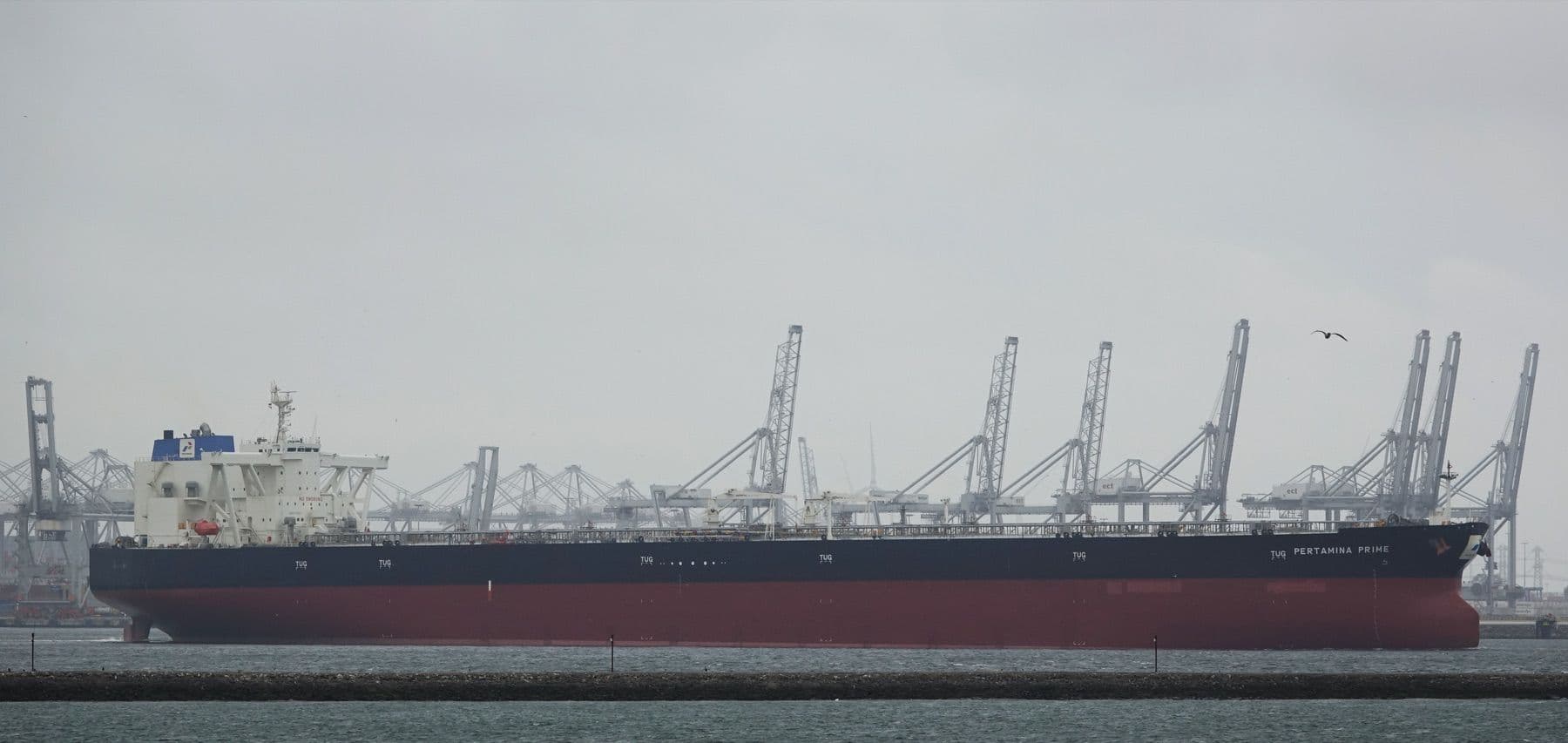
Heavy crude is piling up in North and South America because tanker freight has become too expensive to ship it east. Refiners in Asia and Europe face shortages, and benchmark oil stays above $100 a barrel. The cause is a global tanker shortage: ship-to-ship transfers in the Gulf of Oman, a workaround for the Hormuz crisis, are tying up vessels worldwide.
Key numbers
- VLCC freight, Americas → Asia
- $80M+
- Freight to Asia per barrel
- ~$40/bbl
- Western Canada Select (8 Oct)
- $74/bbl
- US refinery utilization
- 93.5%
VLCC freight, Americas → Asia
vs. ~$10–15M at start of 2026
Freight to Asia per barrel
~40% of a $100 barrel
Western Canada Select (8 Oct)
ex-shipping, vs. $100+ benchmark
US refinery utilization
highest in 28 years
EXHIBIT 1Supertanker freight
US Gulf Coast → Asia supertanker cost has more than quintupled since February.
EXHIBIT 2Stranded crude prices
8 Oct 2026, $/bbl, excluding shipping
Canadian, Colombian and Ecuadorian grades each fell $10+/bbl to six-week lows. Freight erases the discount for Asian buyers.
Why the barrels are stuck
- Too few ships: ship-to-ship transfers near Hormuz tie up tankers, so fewer are available on other routes.
- More supply: Venezuelan exports surged after the US captured Maduro in January, Canadian output is at a record, and the US has released 130M+ barrels from its emergency reserve.
- US refiners maxed out: runs near 93.5% capacity chasing record diesel prices; cokers that process heavy crude are near full use.
Sectors impacted
- Winner
Tanker owners
Record freight rates on scarce supertankers
- Loser
Americas producers
Wider discounts; barrels going into storage
- Loser
Asian & European refiners
Short on heavy crude; high delivered cost
- Mixed
US Gulf Coast refiners
Cheap feedstock, but no spare capacity
- Loser
Diesel users
Trucking and farming face soaring US diesel
Educational research, not investment advice. Prepared by student analysts of the Commodities and Shipping Club at Northeastern University from the sources cited above.